
In today's competitive and contemporary environment, for organizations, the aim of training and development activity is to help learners improve their capacity, competency, and performance. Learners gain knowledge and skills that may be applied directly or indirectly to the workplace.
CAPACITY BUILDING FOR PERFORMANCE
The training program must be need based and be aligned with the organization goals. If not, it does not pave the way to required change. The adequate learning, and right skill lead to competency and individual performance.
The goal for training is capacity building for goodness and performance but to many organizations, it's a point to ponder as the training program and activities don't seem like producing useful results.
Why Training Fails?
To experts, there may be many faucets to explore while answering this million-dollar question but probably all the experts may have a common response, the learning effectiveness.
Making learning effective is not a linear process. It's a cyclic and systematic process — an ongoing loop of purpose, design, effort, analysis, application, feedback, review, and redesign.
The Dilemma — Training Alignment to Organizational Goals
Second question that must be answered is the training contents and subjects selected. That's embedded in the notion of how organizational learning needs are linked with their ultimate goals.
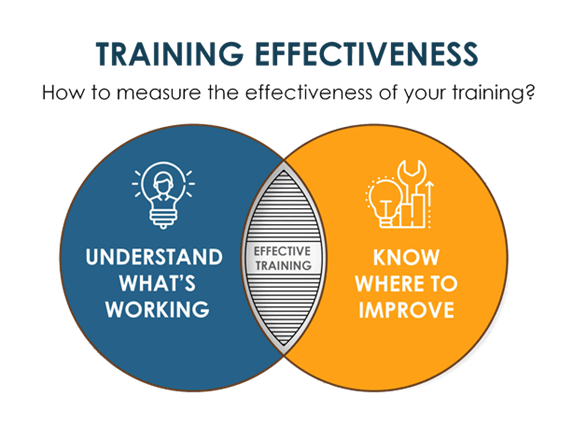
HOW TO MEASURE LEARNING EFFECTIVENESS?
Measuring learning efficacy is a challenge in a complex environment. People are different, they learn differently, and so the mechanism required to measure learning effectiveness may vary.